
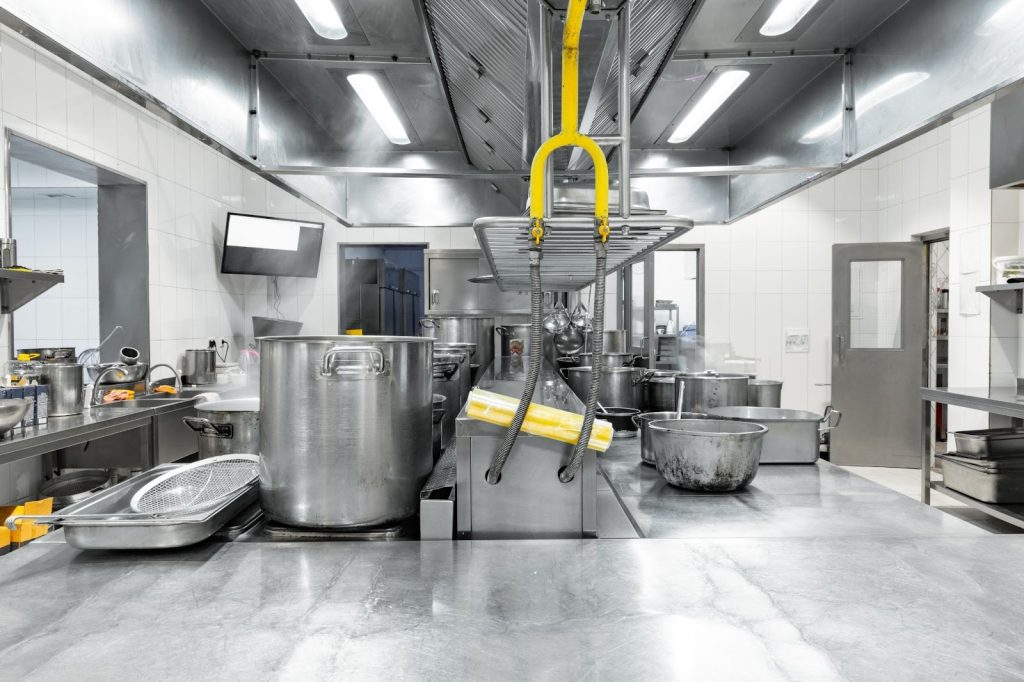
Industrial auctions provide cost-effective access to professional-grade food and beverage processing equipment
Nourishing Development Without Excessively Increasing Expenses
The worldwide food and beverage sector is among the most vibrant and competitive industries currently. Customers anticipate diversity, safety, and cost-effectiveness, whereas companies are required to comply with rigorous hygiene standards and fluctuating market needs. From bakeries making fresh bread every day to extensive beverage factories filling millions of liters, production machinery influences output, efficiency, and profitability.
However, the difficulty resides in expenses. A brand-new spiral dough mixer can be priced in the tens of thousands of dollars, an automated meat and cheese slicer might reach six digits, and a full beverage bottling line could demand investments in the multimillion-dollar range. For small and medium-sized businesses, as well as established companies, these funding needs can hinder expansion.
This is the point where industrial auctions are relevant. Companies can access top-quality food and beverage machinery at costs 40–70% lower than new equipment by acquiring used or surplus items through online and onsite auctions. Numerous units are retired not due to being obsolete, but because of facility enhancements, moves, or excess inventory.
In this article, we will examine:
- Reasons auctions are increasingly favored by food and beverage producers.
- The primary types of equipment provided.
- Gradual tactics for making intelligent purchases.
- Frequent errors to steer clear of.
- Case studies of actual businesses growing via auctions.
- The future prospects for food and beverage equipment in the auction industry.
For more on industrial auctions, visit Greenbidz.
Reasons Auctions Suit Food & Beverage Producers Perfectly
Affordable Growth
Buying equipment at auctions enables companies to maximize their budgets. A bakery can obtain multiple essential machines for the cost of a single new unit, whereas beverage companies can purchase complete lines for under half the new price.
Access to Leading Brands
International brands such as Hobart (mixers), Urschel (slicers), Rondo (bakery equipment), Krones (bottling), and Tetra Pak (processing) often feature in auction listings. This allows smaller companies to use the tools that larger businesses depend on.
Accelerated Growth
Delivery times for new equipment are frequently extended, particularly for tailored solutions. At auctions, equipment is available for instant use, allowing companies to react swiftly to seasonal demand increases or new agreements.
Vast Selection of Choices
From single devices such as mixers and slicers to complete production lines, auctions encompass all phases of food and beverage manufacturing.
Advantages of Sustainability
Companies contribute to the circular economy by purchasing pre-owned machinery. This decreases environmental effects while also supporting ESG objectives — an increasing focus for investors, regulators, and consumers.
Types of Food & Beverage Equipment Available at Auctions
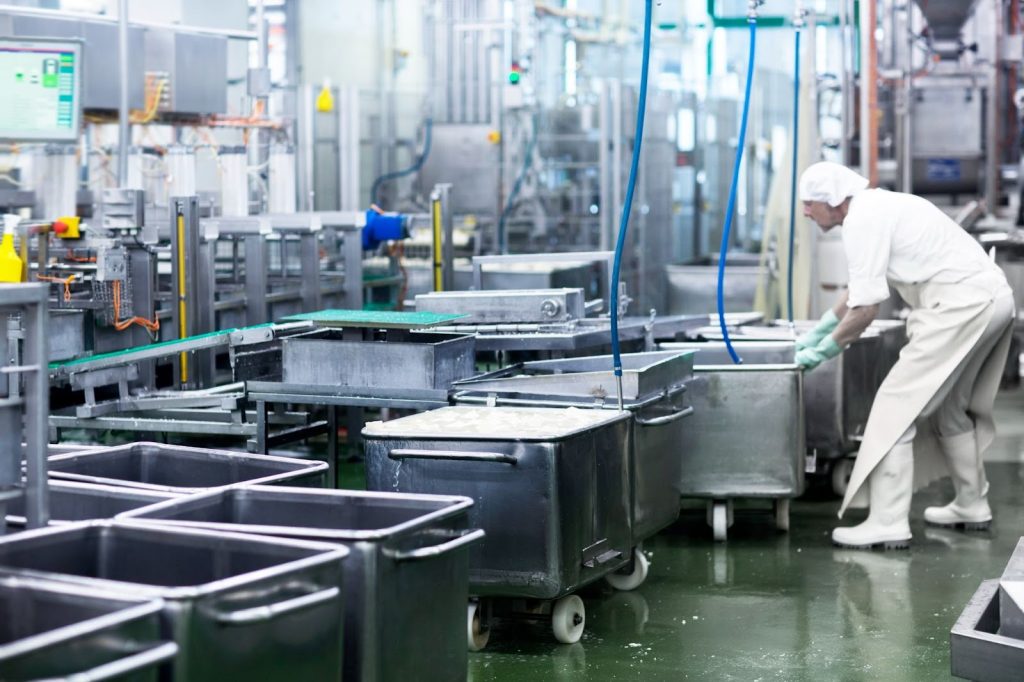
From mixers and slicers to complete bottling lines, auctions offer a full spectrum of food and beverage manufacturing machinery.
Food Production Equipment
- Mixers & Blenders – Spiral mixers for dough, planetary mixers for diverse uses, ribbon blenders for powders, and high-shear emulsifiers for sauces and dressings.
- Slicers & Dicers – Commercial slicers for deli meats, cheese, and bread; Urschel dicers for accurate vegetable processing.
- Cooking & Frying Equipment – Steam kettles, continuous fryers, and tunnel ovens designed for large-scale food manufacturing.
- Packaging Solutions – Vacuum sealers, thermoformers, labeling equipment, and flow wrappers for efficient food packaging.
Bakery Tools
- Dough Dividers & Rounders – Guarantee uniform size and weight in bread and pastry manufacturing.
- Proofers & Ovens – Rotary rack ovens, conveyor tunnel ovens, and deck ovens designed for high-volume baking.
- Confectionery Equipment – Chocolate coating machines, tempering devices, and depositing systems for candies and treats.
Beverage Manufacturing Lines
- Filling Equipment – For glass containers, PET containers, and tins.
- Pasteurization & Sterilization Solutions – Prolong freshness and guarantee safety.
- Carbonation and Blending Systems – Designed for soft drinks, sparkling waters, and energy drinks.
- Entire Bottling & Packaging Lines – Frequently offered as turnkey solutions, prepared for reinstallation.
Supportive Plant Systems
- Refrigeration and Cold Storage Solutions – Essential for the meat, dairy, and beverage sectors.
- Conveyors & Material Handling – Guarantee smooth movement of products throughout manufacturing.
- Quality Control & Metal Detection – Ensure adherence to food safety regulations.
- CIP (Clean-in-Place) Systems – Maintain cleanliness in production lines without dismantling.
Ways to Purchase Food & Beverage Equipment at Auction
Step 1: Determine Production Requirements
Prior to placing bids, companies need to establish their objectives. Are you increasing bread output, venturing into frozen foods, or enhancing beverage packaging? Specific goals help avoid excessive spending.
Step 2: Select the Appropriate Auction Platform
- Online Auctions – Websites such as Greenbidz, Surplex, and EquipNet offer worldwide listings featuring virtual inspections.
- Onsite Auctions – Frequently associated with factory shutdowns, where complete lines are showcased before disassembly.
Step 3: Examine and Confirm
- Request maintenance records, inspection certificates, and service logs.
- Verify adherence to hygiene standards (particularly in dairy and meat processing).
- Verify the availability of spare parts, particularly for older models.
Step 4: Plan Your Budget Beyond the Winning Bid
Auction costs comprise just a portion of the overall expenditure. Purchasers ought to plan finances for:
- Costs for rigging and removal.
- Freight and import taxes (if international).
- Sanitizing and disinfecting to comply with cleanliness regulations.
- Integration and installation frequently necessitate expert engineers.
Step 5: Strategically Place Bids
- Compare with the prices of new equipment to determine your upper limit.
- Search for grouped lots, where complete sets are offered collectively at reduced per-unit prices.
- Steer clear of emotional bidding — consistently establish and adhere to a limit.
Errors to Evade
- Neglecting Hygiene Standards – Adhering to food safety regulations is essential.
- Disregarding Utility Requirements – Equipment might need certain voltage, water, or compressed air configurations.
- Underestimating Installation Difficulty – Complete production lines require specialized integration.
- Bypassing Spare Parts Inspections – Certain older machinery might lack OEM assistance.
- Overbuying – Having too much machinery ties up funds and occupies storage space.
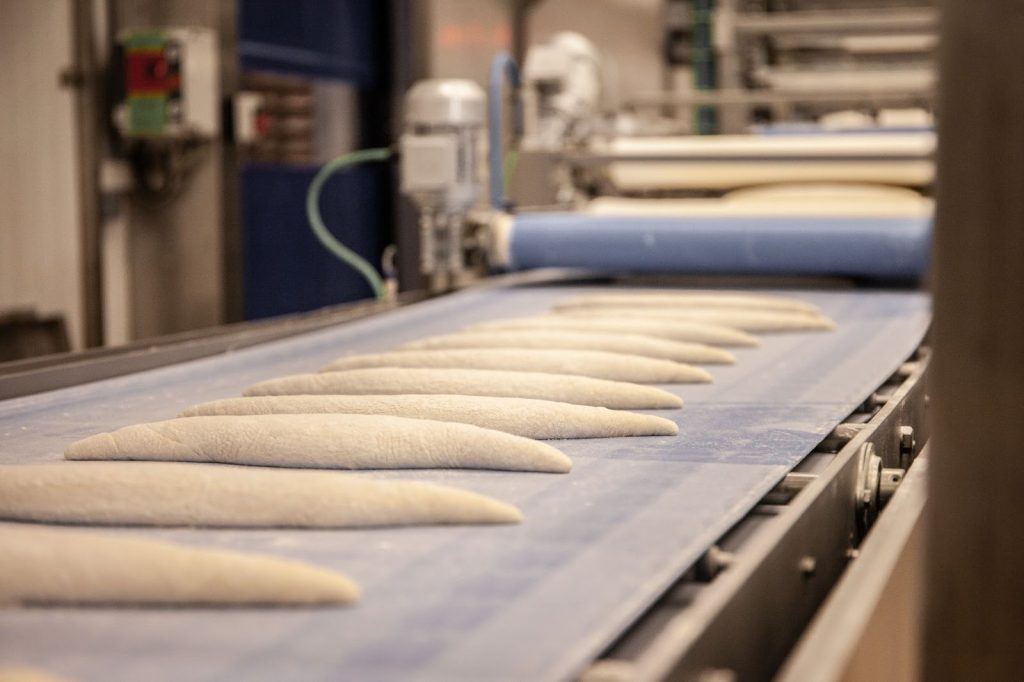
Companies across the globe are expanding production capacity using high-quality auction-sourced food and beverage equipment.
Case Analyses: Tangible Achievements via Auctions
Case Study 1: A Bakery Expands Operations
A bakery owned by a family in Southeast Asia aimed to increase its capacity twofold. Through acquiring gear from European auctions, they obtained:
- A dough sheeter from Rondo
- A rotating rack oven
- A line for packaging bread
Overall expenditure: $120,000, almost 60% under current market rates. In six months, output doubled, the bakery joined supermarket chains, and ROI was realized in less than a year.
Case Study 2: A Beverage Company Expands Nationwide
A startup in South America aimed to grow beyond small-batch production. At the auction, they obtained:
- A bottling line by Krones
- A tunnel for pasteurization
- PET extrusion-blow molding machines
Price: under 50% of retail. The apparatus enabled them to expand to nationwide distribution and obtain agreements with significant retailers.
Case Study 3: Expansion of Frozen Foods in Europe
A mid-sized frozen food company obtained continuous fryers, blast freezers, and conveyors via auctions. Their €450,000 investment would have amounted to more than €1.2 million if purchased new. The funds allowed them to introduce new product ranges and enter international markets.
The Upcoming Trends in Food & Beverage Equipment Auctions
- Digital Bidding Expansion – Internet auctions are increasing availability, allowing international involvement.
- Sustainability-Focused Demand – Businesses are opting for pre-owned machinery to lower their carbon emissions.
- Turnkey Solutions – An increasing number of auctions now include full production facilities for quick reinstallation.
- Intelligent & Hybrid Machinery – Anticipate an increase in availability of energy-saving ovens, robotic packing systems, and IoT-integrated inspection devices.
Final Thoughts: Expanding Intelligently through Auctions
Food and drink companies face the challenge of growing while controlling expenses. Industrial auctions strike the perfect balance: top-notch equipment at lower prices, instant accessibility, and advantages for sustainability.
By recognizing requirements, ensuring adherence, and bidding wisely, businesses can confidently grow — whether by incorporating a single slicer or obtaining a complete beverage line.
For companies looking to expand without financial burden, food and beverage equipment auctions present one of the smartest options in the current market.👉 Check out listings on Greenbidz and other auction sites to find valuable equipment today.