
Auctions: A Transformative Solution for Farmers
The Importance of Farming Equipment
Contemporary farming depends significantly on sophisticated equipment. Tractors, harvesters, and planters are essential to farming—providing improved efficiency, increased harvests, and reliable yields. However, for numerous farmers and agribusinesses, the high expense of new machinery continues to be an obstacle.
Industrial and agricultural auctions have surfaced as an effective alternative. Purchasing equipment via auctions allows buyers to obtain dependable machinery from reputable brands at greatly lowered prices. Whether you’re a farmer enhancing machinery, an agribusiness expanding output, or a reseller seeking lucrative opportunities, auctions can provide significant benefits.
This blog examines why auctions are a wise choice for farming machinery, the kinds of equipment offered, bidding tactics, and the usual mistakes to steer clear of.
Why Auctions Are Beneficial for Farming Machinery
Notable Expense Reductions
New tractors and harvesters may range in price from $75,000 to more than $400,000 based on their size and manufacturer. At auctions, these identical machines frequently sell for 40–70% less than retail, allowing funds to be allocated for seeds, land enhancements, or extra equipment.
Access to Top Brands
Auctions frequently showcase carefully preserved machinery from manufacturers such as John Deere, Case IH, New Holland, Massey Ferguson, and Claas. This indicates that purchasers can maintain both reliability and performance standards.
Quicker Implementation
In contrast to the lengthy wait of several months for a new tractor or combine harvester to arrive, items bought at auction can be accessed right after the sale. This enables farmers to get ready for planting or harvesting seasons promptly.
Expanding Capacity for Developing Agriculture
For farms aiming to grow from small to mid-sized operations—or agribusinesses requiring extra equipment for busy seasons—auctions provide a quick and cost-effective way to expand.
Advantages of Sustainability
Purchasing second-hand equipment prolongs the machinery’s lifespan, minimizes waste, and promotes sustainable agricultural methods. It’s beneficial for both the environment and financial outcomes.
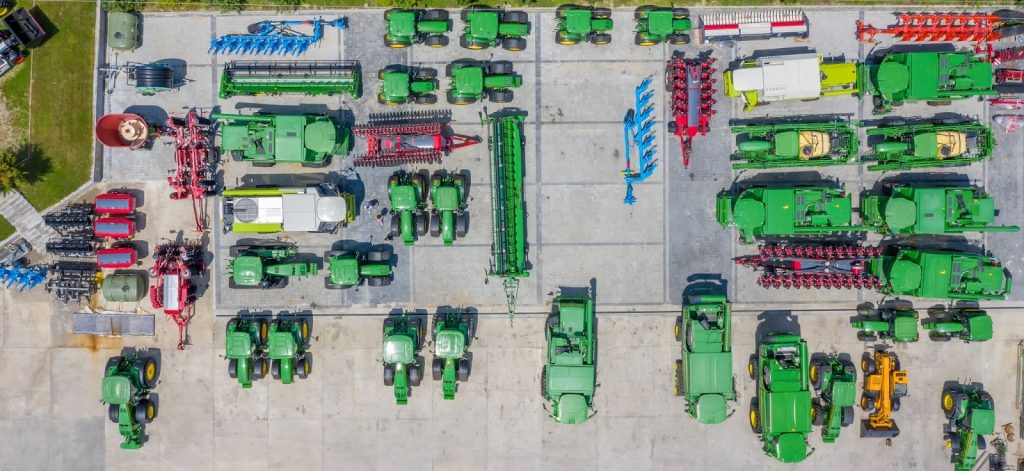
Tractors and harvesters lined up at an agricultural auction, where buyers can access premium machinery at reduced prices
Essential Machinery Discovered at Farming Auctions
Farm Vehicles
Tractors are the backbone of contemporary agriculture, driving almost every activity from tilling to transporting.
- Compact Tractors: Perfect for small agricultural operations and orchards.
- Utility Tractors: Versatile machines for medium-sized farms.
- Row-Crop Tractors: Built for accurate sowing and farming.
- 4WD Tractors: Crucial for extensive farms requiring significant tillage or transportation.
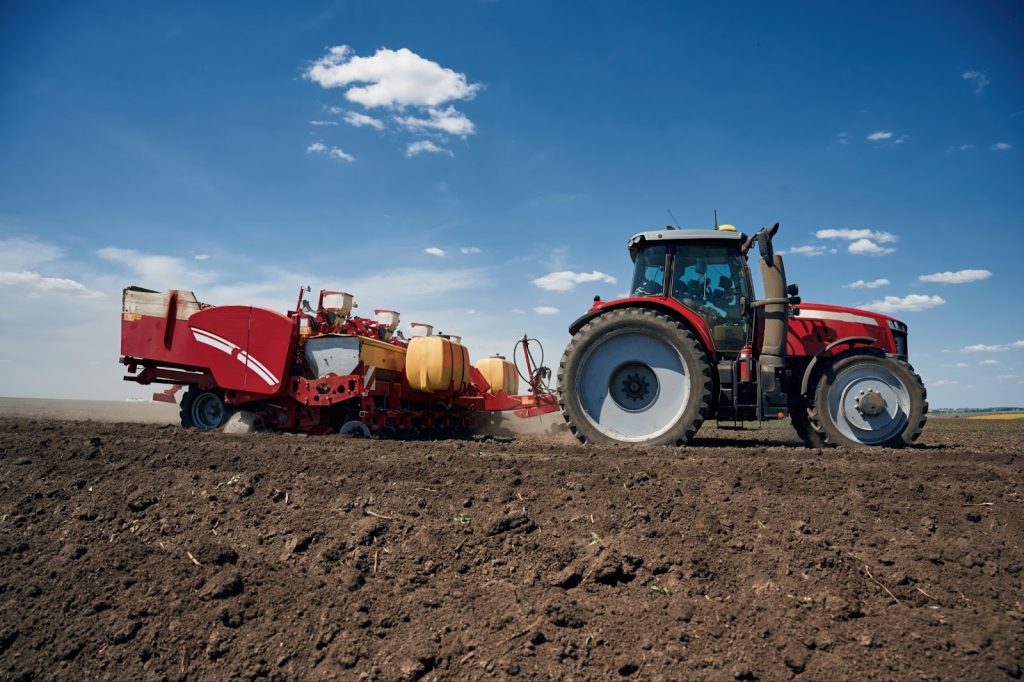
Modern tractors are the backbone of farming—frequently available at auction in reliable, cost-effective condition.
Reapers
Auction lots are predominantly filled with combine harvesters and forage harvesters because of their essential function in contemporary agriculture.
- Combine Harvesters: Perform cutting, threshing, and cleaning of grain simultaneously.
- Forage Harvesters: Cut plants such as corn and grass for making silage.
- Specialty Harvesters: Designed for harvesting crops such as potatoes, sugar beets, or cotton.
Containers & Sowers
Precise planting impacts yield potential, and premium planters frequently show up at auctions.
- Row Planters: Designed for corn, soybeans, and various row crops.
- Air Seeders: Effective for large-scale crops like wheat.
- Custom Seeders: Designed for rice or vegetable farming.
Assisting Tools
In addition to tractors and harvesters, auctions typically feature sprayers, tillage tools, balers, and trailers—all essential parts of a comprehensive farming setup.
How to Purchase Wisely: The Bidding Procedure
Step 1: Identify Your Requirements
Prior to participating in an auction, outline:
- Type of crop (grains, fruits, vegetables).
- Size of the farm and landscape.
- Seasonal requirements.
- Strength, capability, and connection compatibility.
This transparency avoids impulse buying and guarantees the equipment matches your operational objectives.
Step 2: Investigate Market Rates
Examine dealer websites, pre-owned equipment sites, and retail price listings. This establishes a standard for the amount you should be prepared to bid at auction.
Step 3: Select the Appropriate Auction Platform
- Onsite Auctions: Ideal for examining equipment in person.
- Web Auctions: Sites such as Greenbidz, Ritchie Bros, and IronPlanet enable worldwide involvement, frequently offering inspection reports.
Step 4: Examine the Gear
Regardless of being physically present or online, consistently assess:
- Hours of operation (for tractors and harvesters).
- History of maintenance (oil changes, replacement of parts).
- Wear on dynamic components (chains, belts, bearings).
- Tires and hydraulics (expensive to replace if damaged).
Step 5: Prepare Your Budget Beyond the Proposal
The hammer price is not the complete narrative. Consider:
- Transportation and logistics.
- Costs for rigging/dismantling (for large harvesters).
- Customs tariffs (for overseas acquisitions).
- Renovation or maintenance.
Step 6: Perfect Bidding Strategies
- Establish a top bid and adhere to it.
- Offer wisely—don’t show enthusiasm too soon.
- Keep an eye on less sought-after models (usually more affordable, yet just as dependable).
- Think about bulk purchases if you intend to resell.
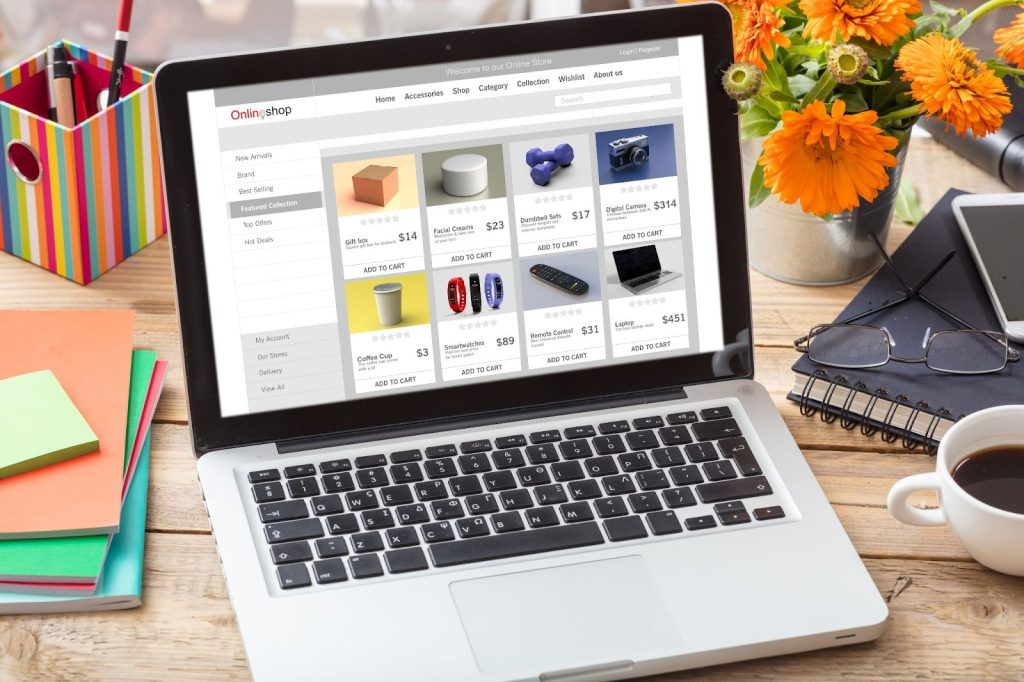
Online auctions make it easy for farmers and agribusinesses to bid on equipment from anywhere in the world
Frequent Errors to Dodge
- Neglecting Inspections: Equipment lacking maintenance records or having high operating hours can soon turn into expensive liabilities.
- Disregarding Power Needs: A big tractor might be excessive for a minor farm, and some planters may not be suitable for local soil types.
- Minimizing Logistics Expenses: Transporting a combine harvester can be costly. Plan this ahead of time.
- Excitement Overbidding: The rush of an auction can lead buyers to spend excessively. Consistently remain within boundaries.
- Acquiring Excessive Equipment: Although it’s appealing to purchase several machines, redundant tools can immobilize funds.
Case Analysis: Minor Farm, Major Success
A family-operated farm in South America required an increase in soybean output. Purchasing new tractors and harvesters was not financially feasible, so they opted for an online auction.
They obtained:
- A John Deere 7R Tractor priced at 50% less than retail.
- A Case IH Combine Harvester accompanied by complete maintenance documentation.
- A 6-row planter in superb condition.
In just one year, they increased production by 40% while maintaining manageable debt levels. The savings enabled reinvestment in irrigation enhancements, leading to increased yields.
The Prospects of Farm Machinery Auctions
- Digital Expansion: Online auction sites are growing worldwide, enabling farmers in isolated regions to engage more easily.
- Bundled Lots: More auctions are providing comprehensive farming solutions—tractor, planter, and harvester sold collectively for seamless growth.
- Sustainability Emphasis: Anticipate increased focus on prolonging the lifespan of machinery to align with worldwide sustainability objectives.
- Reseller Options: With increasing demand, equipment resellers can benefit by buying at auction and selling to nearby farmers.
Conclusion: Transitioning from Smart Bidding to Smart Farming
Tractors, harvesters, and planters are crucial for optimizing yields, yet they shouldn’t be overly expensive. Agricultural auctions provide purchasers with reliable brands, competitive prices, and instant availability.
By establishing clear objectives, examining equipment thoroughly, planning budgets accurately, and placing bids wisely, farmers and agribusinesses can transform auctions into an effective growth resource.
Whether you’re enhancing a family farm or growing a regional agribusiness, intelligent bidding results in substantial yields—while managing capital expenditures effectively.
Discover new possibilities on platforms such as Greenbidz to embark on your path to cost-effective, top-notch agricultural tools.