
The Growing Need for Automation
In the current rapid manufacturing and industrial environment, automation has become essential and is not just a privilege for multinational companies. From tiny workshops to medium-sized manufacturing plants, companies are acknowledging that automation is essential for competitiveness, efficiency, and cost reduction.
However, a significant barrier hinders numerous businesses from embracing automation: significant initial expenses. Modern industrial robots, vision systems, and robotics integration solutions frequently need investments in the six-figure range. For smaller manufacturers or businesses experimenting with automation for the first time, such expenditures are hard to rationalize.
This is where industrial auctions offer a transformative chance. By acquiring surplus, barely used, or uninstalled automation systems through auctions, companies can access advanced technology at a significantly reduced price — often 40–70% cheaper than purchasing new.
This blog examines ways to achieve affordable automation by leveraging auctions, concentrating on industrial robots and vision systems, and offers useful advice for purchasers. For more on industrial auctions, visit Greenbidz.
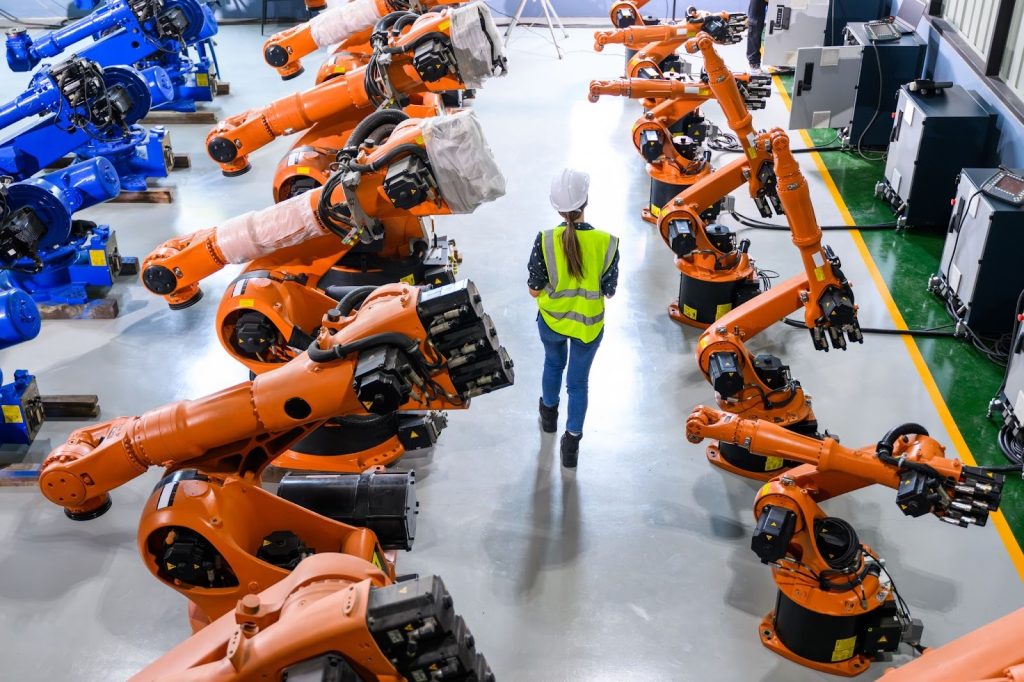
Industrial robots like FANUC and KUKA arms are often found at auctions, giving businesses access to automation at a fraction of retail costs.
Reasons Businesses Opt for Auctions in Automation
Industrial auctions have progressed from merely selling outdated equipment or liquidated property. Currently, they function as a marketplace for cutting-edge automation technologies that might be just a few years old.
Companies opt for auctions to enhance automation due to:
- Reduced Entry Costs – Auctions significantly lower the financial hurdle for obtaining automation equipment.
- Access to Established Technology – Numerous robots and vision systems available at auction have been functioning effectively in production settings, guaranteeing dependability.
- Scalability – Businesses have the ability to trial automation on a limited scale prior to committing to more units.
- Sustainability – Acquiring second-hand automation systems promotes circular economy principles by prolonging the lifespan of equipment.
For sectors facing ongoing cost challenges — like automotive, electronics, packaging, and food processing — auctions offer a key strategic avenue for automation adoption.
Focus on Automated Equipment for Auction
Manufacturing Robots
Industrial robots serve as the foundation of contemporary automation. From production lines to material transport, these machines provide unparalleled accuracy, velocity, and reliability.
In auctions, typical robot categories consist of:
- Articulated Robots – Flexible, featuring multi-joint arms ideal for assembly and welding tasks.
- SCARA Robots – Streamlined, perfect for rapid pick-and-place tasks.
- Delta Robots – Ideal for rapid packaging and sorting.
- Collaborative Robots (Cobots) – Designed for safe human interaction, becoming more popular with small manufacturers.
By purchasing these robots at auction, firms can obtain reliable machines from manufacturers such as FANUC, ABB, KUKA, and Yaskawa without incurring retail markups.
Imaging Systems
Vision systems serve as the “eyes” for automated processes. They enable robots and machines to evaluate, gauge, and direct processes with exceptional precision.
Vision equipment sold at auction frequently comprises:
- 2D/3D Cameras – Used for inspection, identifying defects, or guiding assembly.
- Laser Profilers – Employed for exact measurements.
- Integrated Vision-Inspection Systems – Independent or robot-integrated options for quality assurance.
Vision systems play a vital role in sectors such as electronics, pharmaceuticals, food processing, and automotive, where maintaining product quality is essential. Auctions render these advanced systems economically attainable.
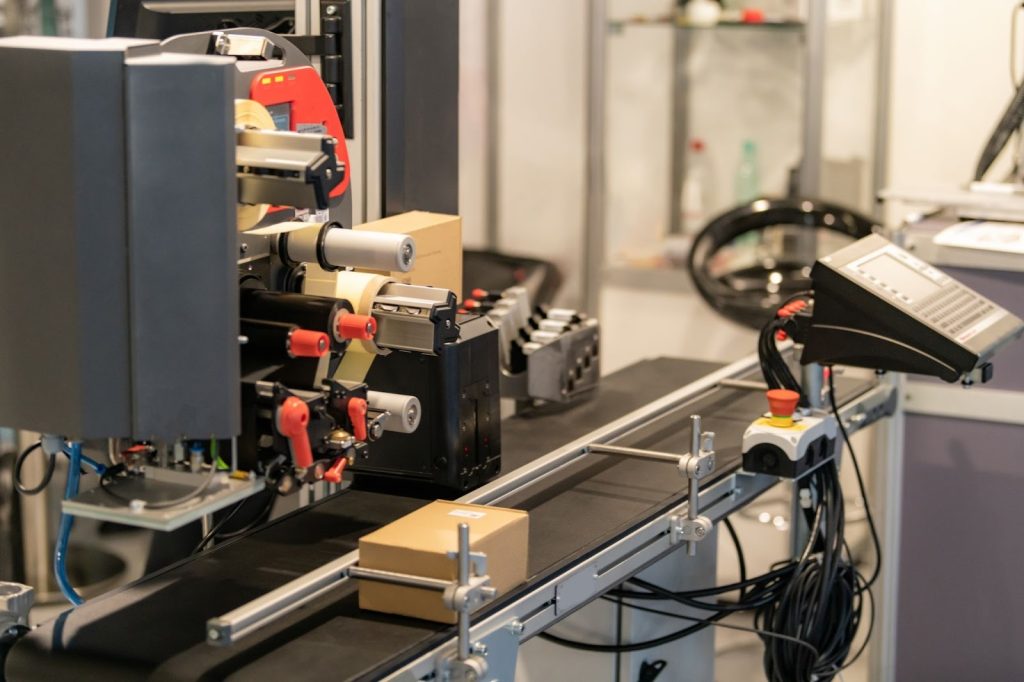
Vision systems provide the ‘eyes’ of automation, ensuring quality and precision in manufacturing processes.
Robotic Systems and Control Mechanisms
In addition to single robots and cameras, auctions showcase fully automated systems — comprising control cabinets, software, and robotic cells.
Acquiring a complete robotics system enables companies to speed up the adoption of automation without having to integrate individual components gradually. Frequently, these systems were components of production lines that were either retired or enhanced, indicating they remain entirely functional.
The Benefits of Automation Sourced from Auctions
Purchasing automation equipment through auctions offers numerous advantages that correspond with both operational and financial objectives:
- Cost Reductions – Savings of 40–70% when compared to purchasing new equipment.
- Quicker ROI – Reduced initial expenses decrease payback durations, rendering automation more economically viable.
- Demonstrated Dependability – Gear obtained from auctions typically has a track record of effective operation.
- Shortened Lead Times – In contrast to new orders that can face production or shipping hold-ups, auctioned equipment is typically ready for immediate availability.
- Sustainability Effect – Prolonging the lifespan of automation technology minimizes industrial waste.
These advantages are difficult for cost-sensitive businesses to overlook.
Obstacles & Factors to Consider When Purchasing at Auction
Although the prospects are substantial, companies need to engage in automation auctions with thoughtful preparation. Important factors to consider are:
- Compatibility – Verify that robots or vision systems work seamlessly with your current production configuration.
- Condition Assessment – Determine if the equipment is new, slightly used, or extensively worn. Reports and videos of inspections are frequently supplied.
- Software & Licensing – Ensure that essential software or licenses are provided, particularly for vision systems.
- Support & Maintenance – Assess if spare parts and service providers are easily accessible in your area.
- Concealed Expenses – Consider shipping, rigging, and installation costs when assessing savings.
By taking these measures, businesses can prevent unforeseen challenges and enhance the worth of their investment.
Useful Advice for Bidding on Automation Machinery
- Investigate the Market – Understand the legitimate market price of the equipment you intend to bid on.
- Create a Budget – Set upper bid boundaries to prevent excessive spending.
- Begin with a small investment – Think about acquiring one robot or vision system to evaluate prior to expanding.
- Utilize Professional Assistance – Collaborate with automation advisors or auction experts for technical guidance.
- Keep an Eye on Future Auctions – Numerous international auction sites enable you to create notifications for robotics or automation sections.
Through strategic bidding, firms can acquire valuable equipment while adhering to budget constraints.
Case Study: A Medium-Sized Producer Adopts Robotics
Think about a medium-sized electronics producer facing difficulties due to a lack of workforce in its assembly processes. A new robot from a top brand would have set the company back more than $120,000, a cost considered impractical.
The company obtained a gently used articulated robot with a vision-guided inspection system for slightly less than $45,000 at an industrial auction. In six months, the robot was completely integrated into the assembly line, enhancing throughput by 35% and lowering defects by 20%.
This situation emphasizes how auctions create practical opportunities for businesses to implement automation cost-effectively.
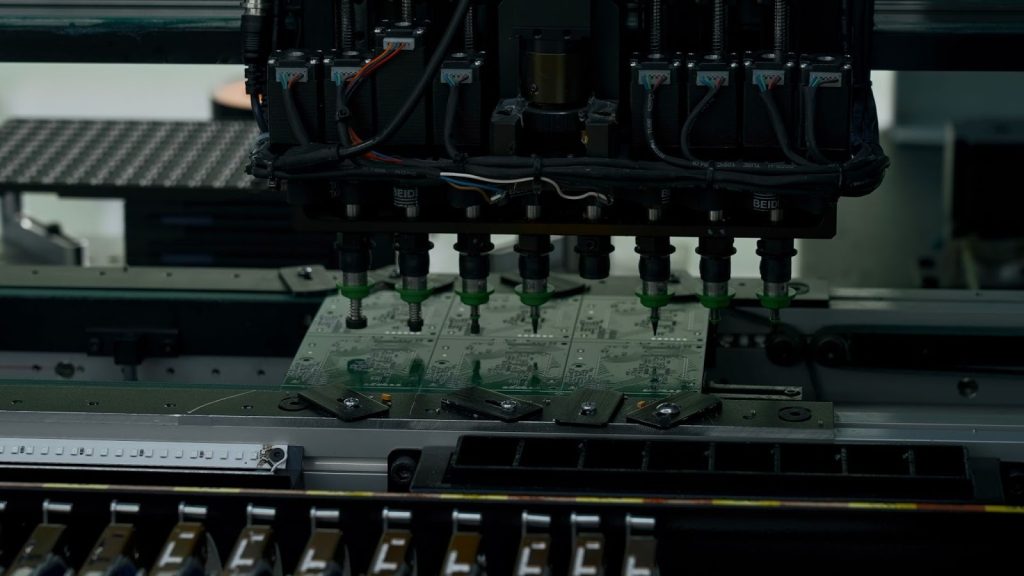
A mid-sized electronics manufacturer boosted throughput and cut defects by integrating auction-sourced robotics.
The Future of Cost-Effective Automation
As global industries keep digitizing and automating, the need for robotics and vision systems will continue to grow. Thankfully, industrial auctions will increasingly contribute to making this technology more accessible to everyone.
Global supply chains generating excess equipment, along with more businesses upgrading to newer models, make the secondary market for automation abundant with potential.
Final Thoughts
Automation is no longer solely the realm of multinational companies with endless financial resources. Due to industrial auctions, small and medium enterprises can now embrace automation at a much lower expense.
By strategically choosing and bidding on industrial robots, vision systems, and robotic solutions, businesses can enhance productivity, minimize mistakes, and safeguard their operations for the future — all while adhering to budget constraints.
The message is straightforward: cost-effective automation is attainable, and auctions are the pathway. For more on industrial auctions, visit Greenbidz.